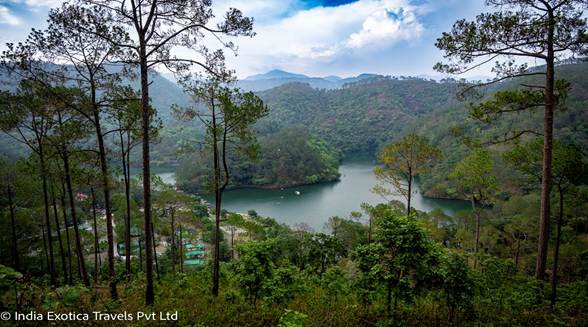


The British, during their time in India, would migrate to the cool hills during the scorching summer months. I have had the same habit ever since I’ve been around to remember.
The heat waves roll over Delhi in the month of June, and before you know it, I’m excavating heavy winter clothes from deep within storage boxes, and getting ready to wake in the middle of night for an early 4 am departure to the hills. For five days, I’d belong to the versatile state of Uttarakhand.
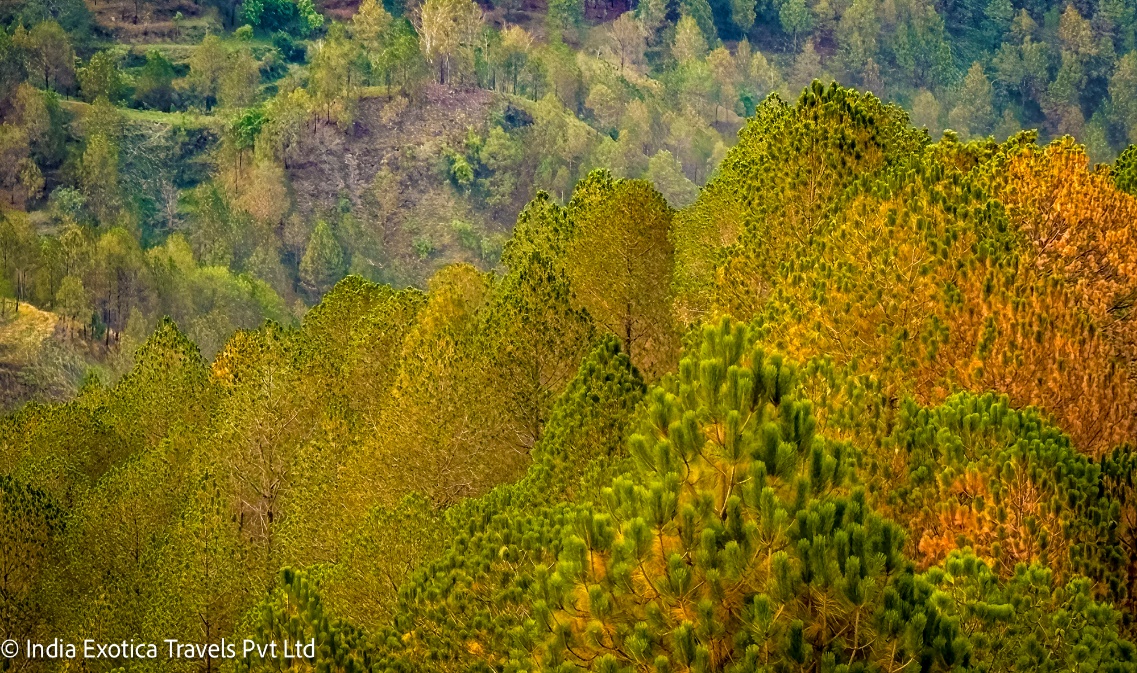
The drive is usually eight hours long. Pine trees adorn the hills as one ascends them.
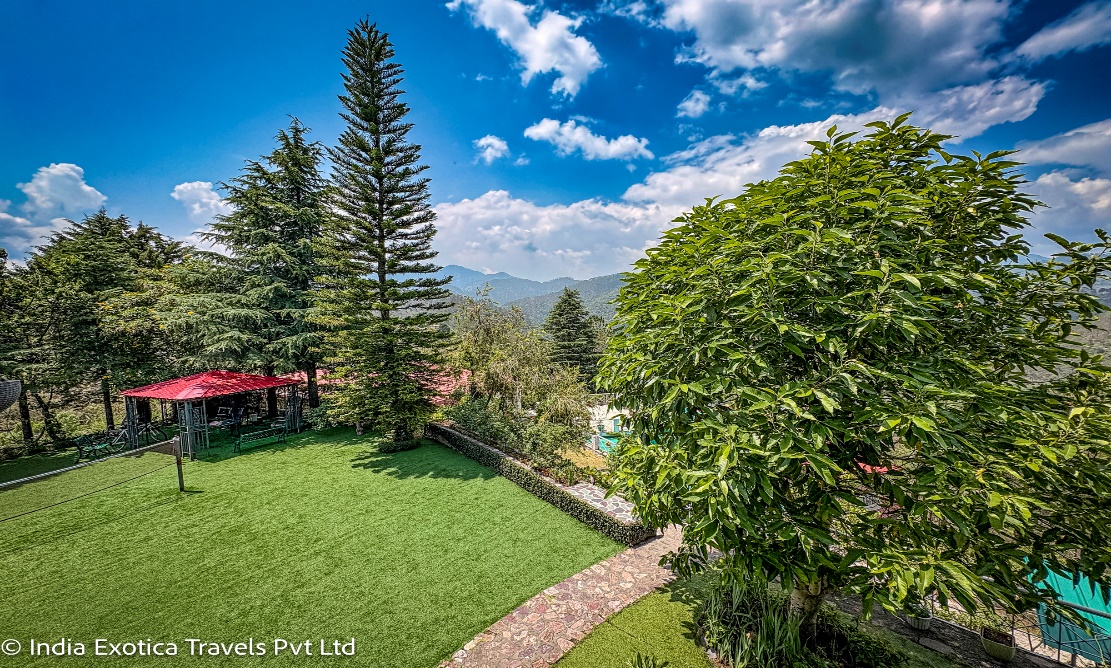
I make my first stop at the Sattal Forest Resort in the quaint little hill town of Suryagaon. The staff were warm when they served welcome drinks that were made freshly of seasonal rhododendron. The dreamy green gardens on the resort grounds, the bright pinks and yellows on the walls, an ornate gazebo, and endless sunshine were something out of a fairytale. After a delicious homemade lunch made with locally sourced ingredients, I explored the various activities that the resort offered. Games, books, music. Some residents at the property occupied the chess board and the pool table, while I sat over the little keyboard.

In the evening, I took a walk down to the Suryagaon town square. It was a winding downhill walk with views of the pristine Sattal lake, up-close and unobstructed. The roads lead down to the banks of the lake. The town square is adorned with little shops all around. String lights hung overhead, littering the ground with little diamond specks. Soon enough, I decided to take a boat ride on the big blue lake.
The lake was surreal as I stepped onto the boat. Nestled between mountains on all sides, it seemed endless as I boated farther from the bank. The noise hushed, and suddenly, all you can hear are the quiet sounds of the water. It allowed for some relaxed conversation. Mostly, it allowed for the mind to shut off for a few minutes and recalibrate.

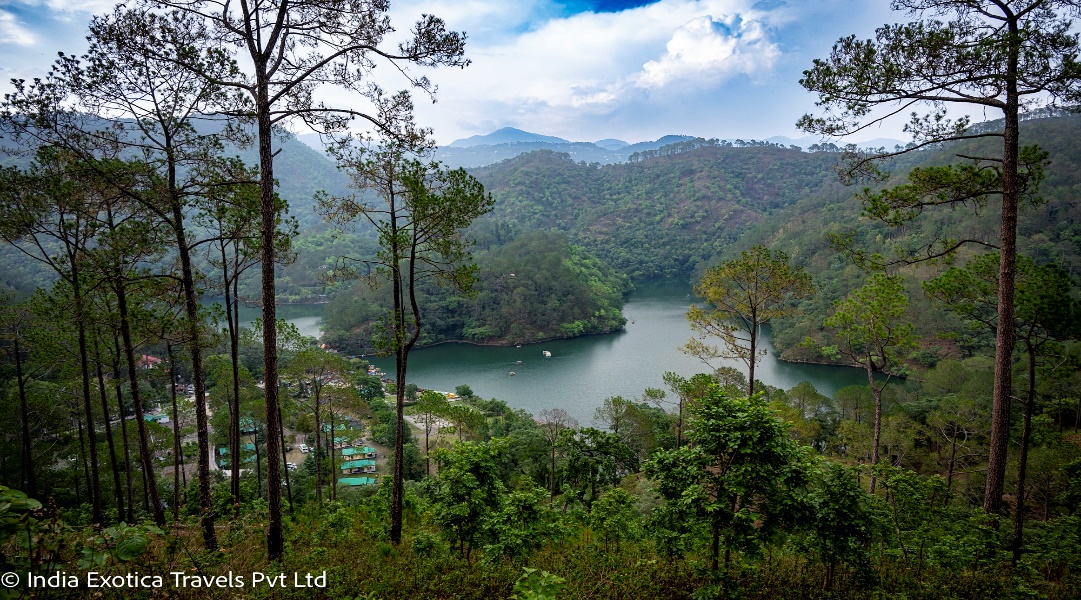
The walk back to the resort was a steep uphill climb. It made dinner all the more rewarding. I was to be travelling again the next day.
After a hearty breakfast, I drove up to the religious hill town of Jageshwar. The town is said to be home to 125 temples dedicated to Lord Shiva. It is said that Lord Shiva himself, in an assumed mortal body, had chosen this town to meditate in. He was drawn in by its tranquility and untroubled naturalness, which is exactly what is to be said of the low-hanging mist and the dense green forests. Later sages had deemed that Shiva’s energy was more “awakened” in this town. Hence the name, Jageshwar, which loosely means the “awakened town”.

The stoney Van Serai Lodge was to become home for the next two nights. It was perched atop the low slope of a mountain, concealed behind a thick curtain of green deodar leaves. A verandah running around the rooms faced you directly with the deodar forest, as if you were floating right inside it. The nighttime was not was for the faint-hearted. One look outside the warmth of your room, and the pitch-black darkness of the untouched forest would meet you head-on.
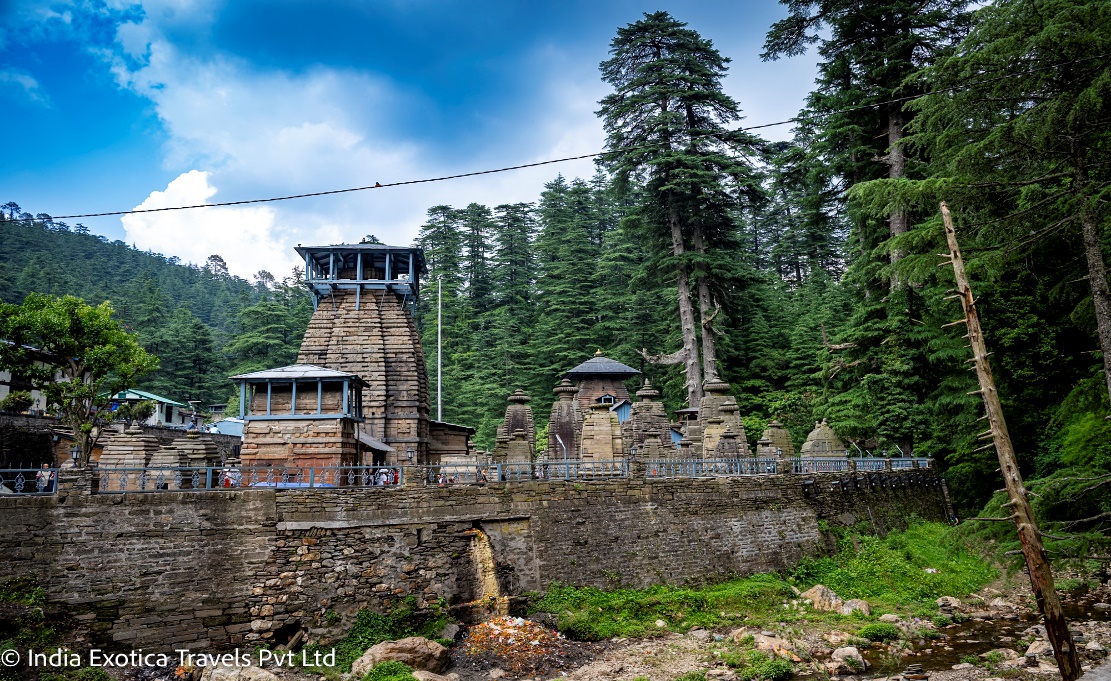
The next morning, I hiked up to the historical Jageshwar Dham Temple Complex. It was a little over a kilometer on an uphill path. The Jageshwar Dham Temple Complex was built between the 7th and 14th Century C.E., by patrons from the local Katyuri Dynasty. It comprises of numerous Hindu temples dedicated to Lord Shiva, one also to Goddess Durga and the Sun God each. The complex is vast, with ceremonies and rituals unfolding in nearly each temple within it. Scores of pilgrims from across the country come either to seek blessings or to simply admire the place for its history and architecture. The temples were built predominantly in the Nagara style of architecture, with a few features that belong distinctly to the Kalinga school of architecture as well. Temple architecture here highlights the limitations that mountain topography places on construction, and the creative solutions that native mountain residents employ to demonstrate commitment to belief and tradition. Pilgrimage sites have a unique way of creating a sense of community and belonging. The less-explored Jageshwar Dham Temples do the same, for believers and non-believers alike.

The Jageshwar Archaeological Museum was next on the itinerary. It carried excavations of Hindu relics, statues of gods and goddesses, as envisioned by the hill cultures of Uttarakhand. Stone inscriptions shed light onto the ancient mythological beliefs and opened a window into the history of this relatively untouched and unexplored region. The subtle diversities in interpretations of the same beliefs and mythologies, as regionally determined and evidenced, further emphasise the continuity of the cultural threads running across India.
I walked back to the lodge under a calm drizzle. The rest of the evening was spent unwinding at the lodge. The green deodar forests seemed a perfect camouflage, shutting the world out.
The mist-veiled sun rose, and I headed to my last destination of the trip.
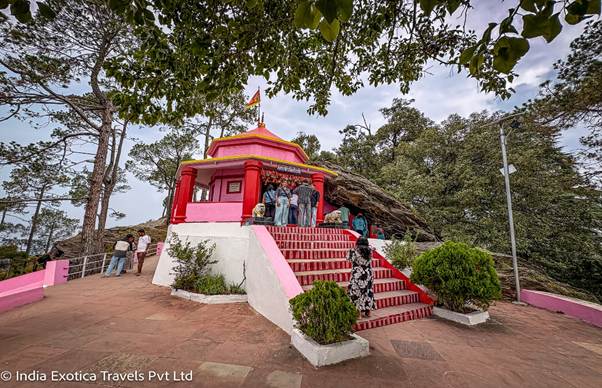
On the way to the last destination, I stopped at the Kasar Devi Temple. They say that the spot where the temple stands is where the Goddess Kaushiki, an incarnation of Goddess Durga, had vanquished the two demon brothers Shumbha and Nishumbha, thereby sanctifying the region and protecting its people from evil. The hill on which the temple rests is considered to have intense spiritual energy. Many figures from the fields of music and philosophy have visited this site to seek spiritual guidance. Some notable names include Bob Dylan, George Harrison and Alfred Sorensen.
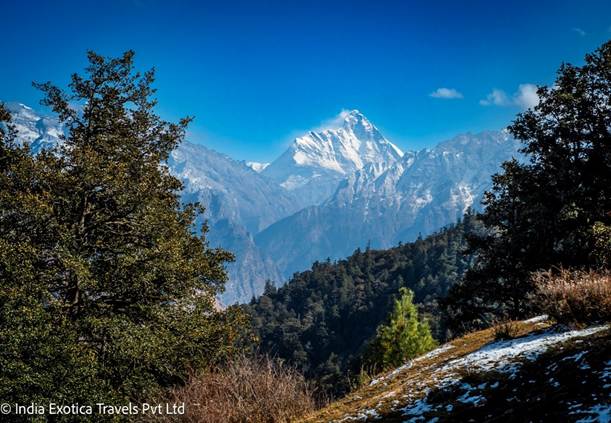
After lunch at a cozy mountaintop café, I moved onwards to the Renz Himalayan Retreat. A few steps up from the common area would lead you to a clearing. At the clearing, if you were to take a casual look to your left, you would find the most serious views of the Nanda Devi peak. The Nanda Devi peak is the second-highest peak in India, standing 7,816 meters tall. The view is right across the lodge grounds, in-your-face and unhindered. For two days, I watched the sun rise over the mountain and then set over it. In the interim, there was sunbathing on the grassy grounds, and charades in the rustic, colonial-inspired interiors.
Uttarakhand offers God and peace. Thrill and adventure too, for those who seek it. Nowhere else presents as perfect an escape from the summer heat, as does this generous state.
Get Your Free Drone Autonomy Guide Today!
