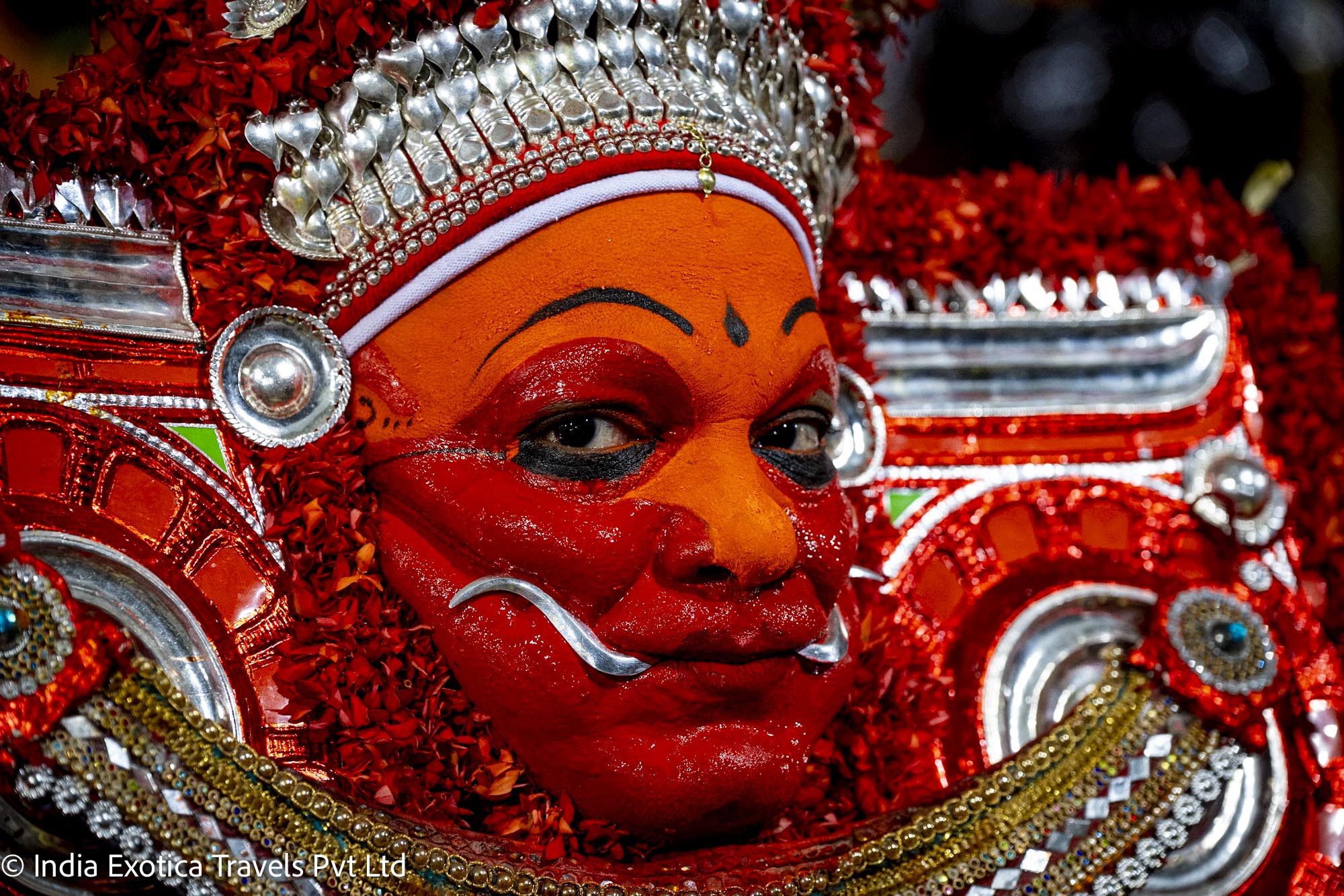


Theyyam: Where the Gods Walk Among Us in Malabar
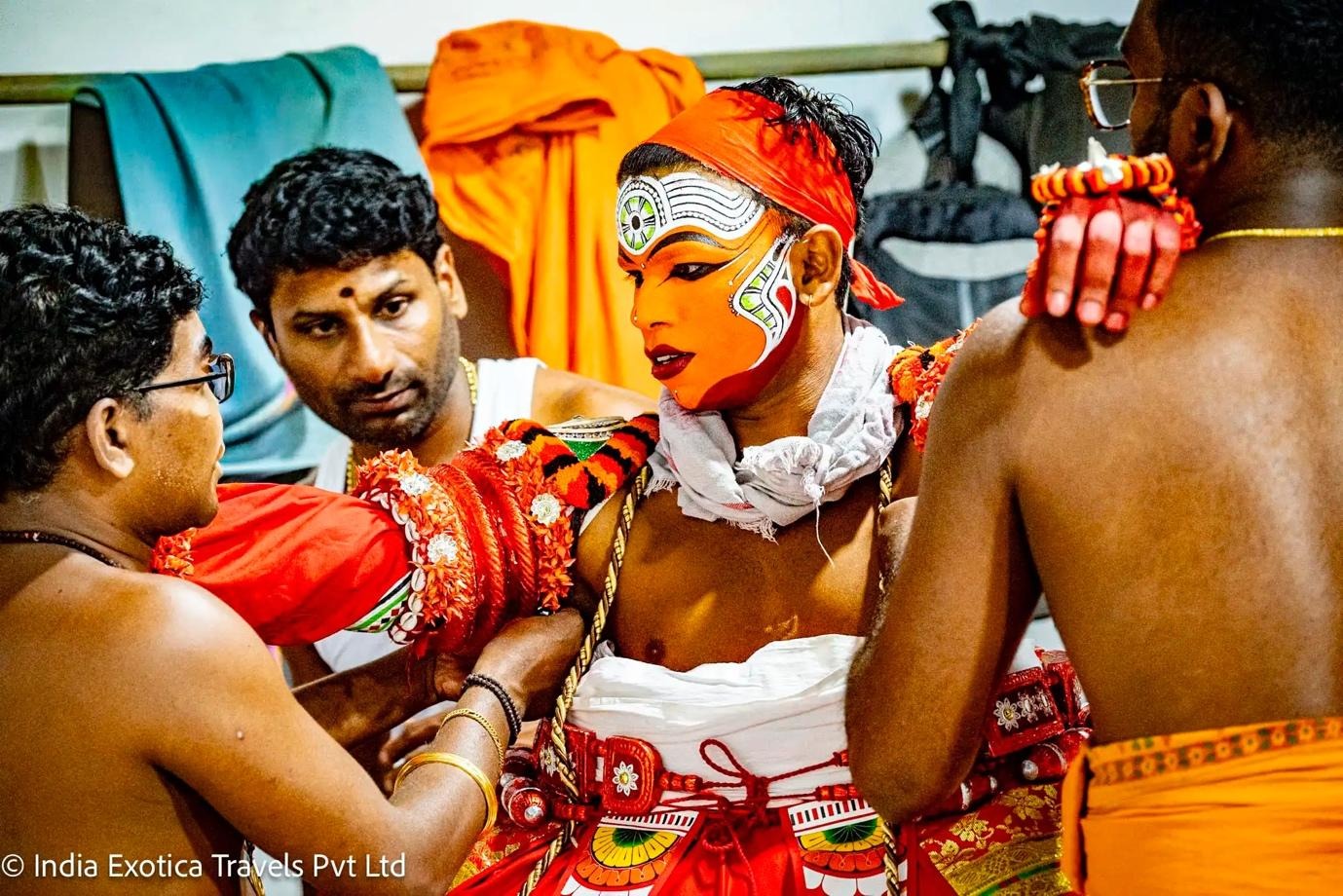
In the quiet villages of northern Kerala, long before sunrise breaks over the coconut groves of Kannur, drums begin to echo through the darkness. Oil lamps flicker. The air grows thick with incense. And slowly, almost imperceptibly, a transformation begins.
This is Theyyam — one of India’s most ancient and visually arresting ritual art forms.
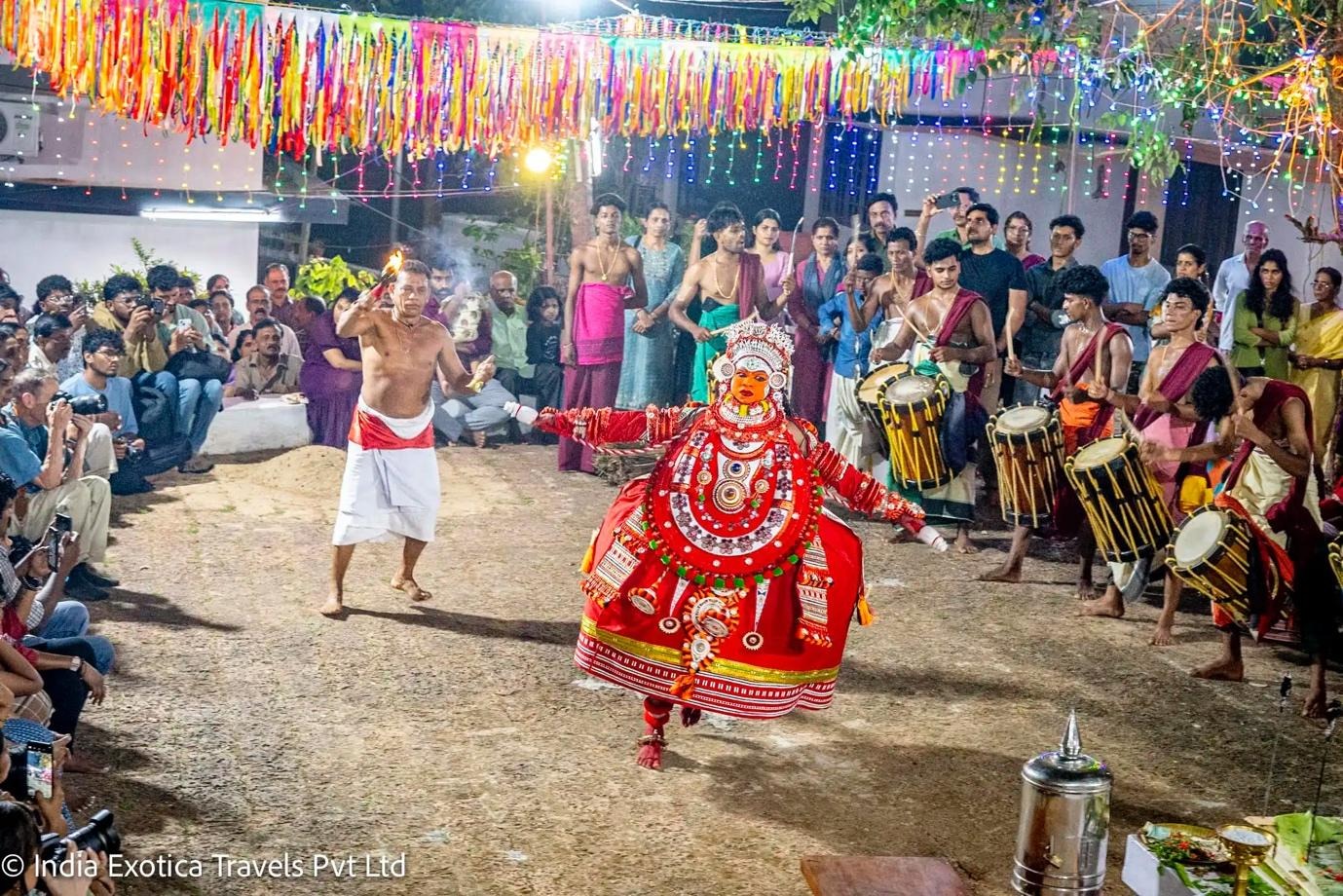
During our recent photographic journey to the remote shrines around Kannur, our guests willingly traded sleep for something far more profound. Late nights turned into early mornings as we travelled along narrow village roads to witness rituals that have been performed for centuries. Fatigue quickly dissolved in the presence of colour, fire, rhythm, and devotion.
Theyyam is not merely performance. It is living tradition.
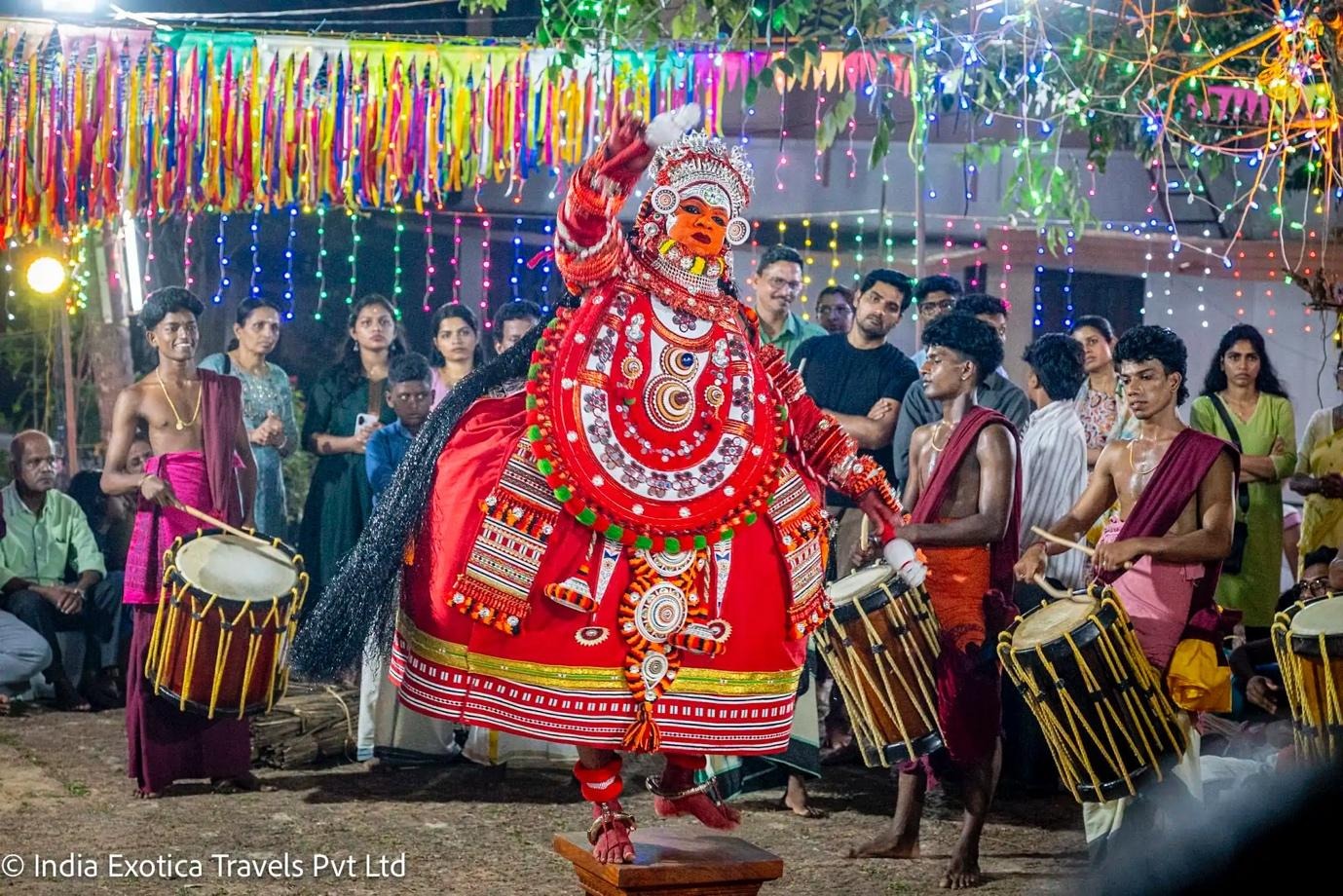
Hours before the ritual begins, the artist patiently applies intricate face paint — bold reds, deep blacks, radiant yellows — each line drawn with symbolic precision. Towering headgear and elaborate costumes follow, transforming the human form into something extraordinary. Then comes the most arresting moment: the dancer gazes into a mirror. In that sacred instant, it is believed that the divine presence descends. The performer is no longer simply an individual — he becomes the embodiment of the deity.
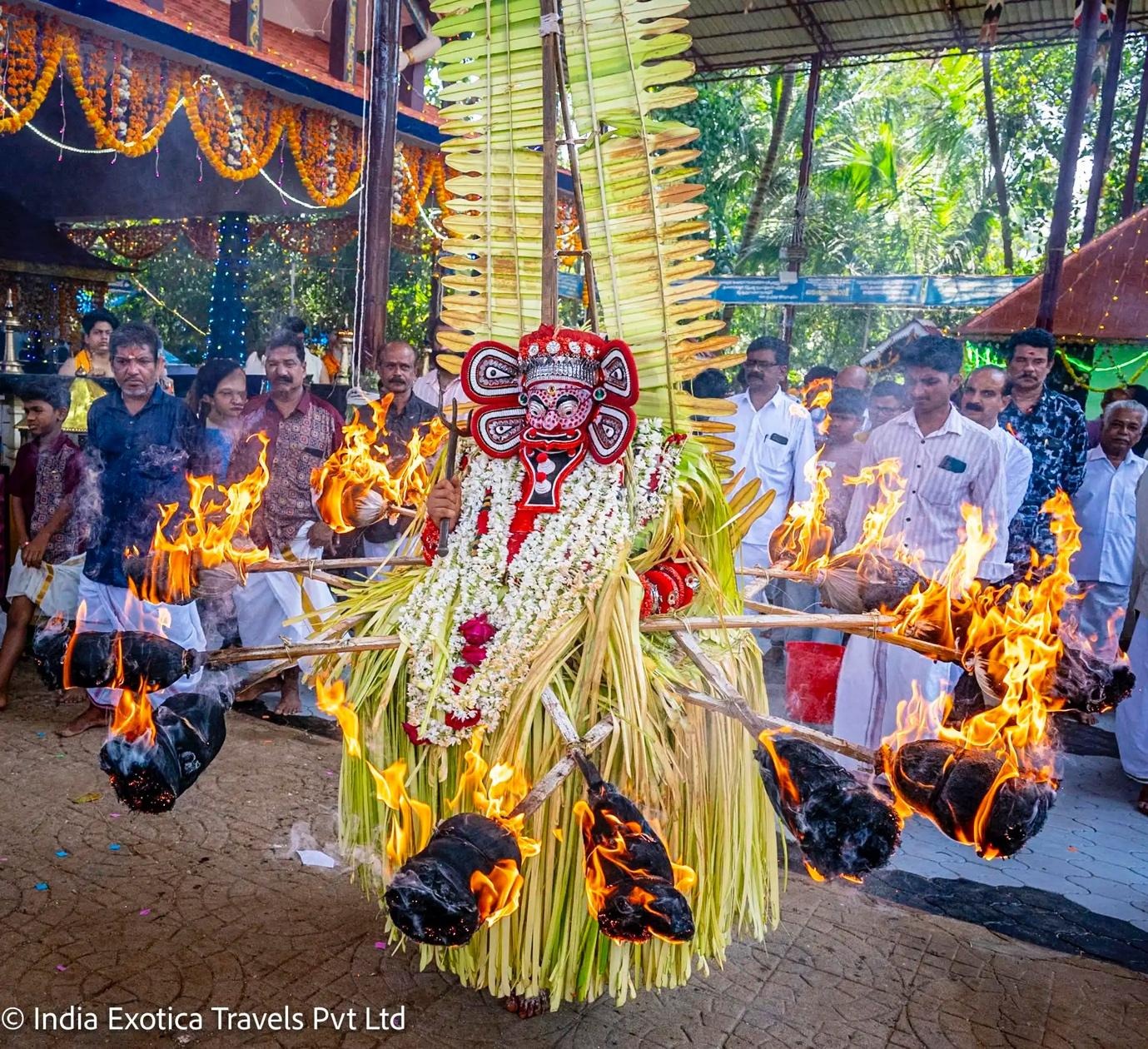
What unfolds next is deeply moving. Villagers gather with reverence. Prayers are offered. Blessings are sought. The energy is electric yet intimate — a rare intersection of theatre, faith, mythology, and community life.
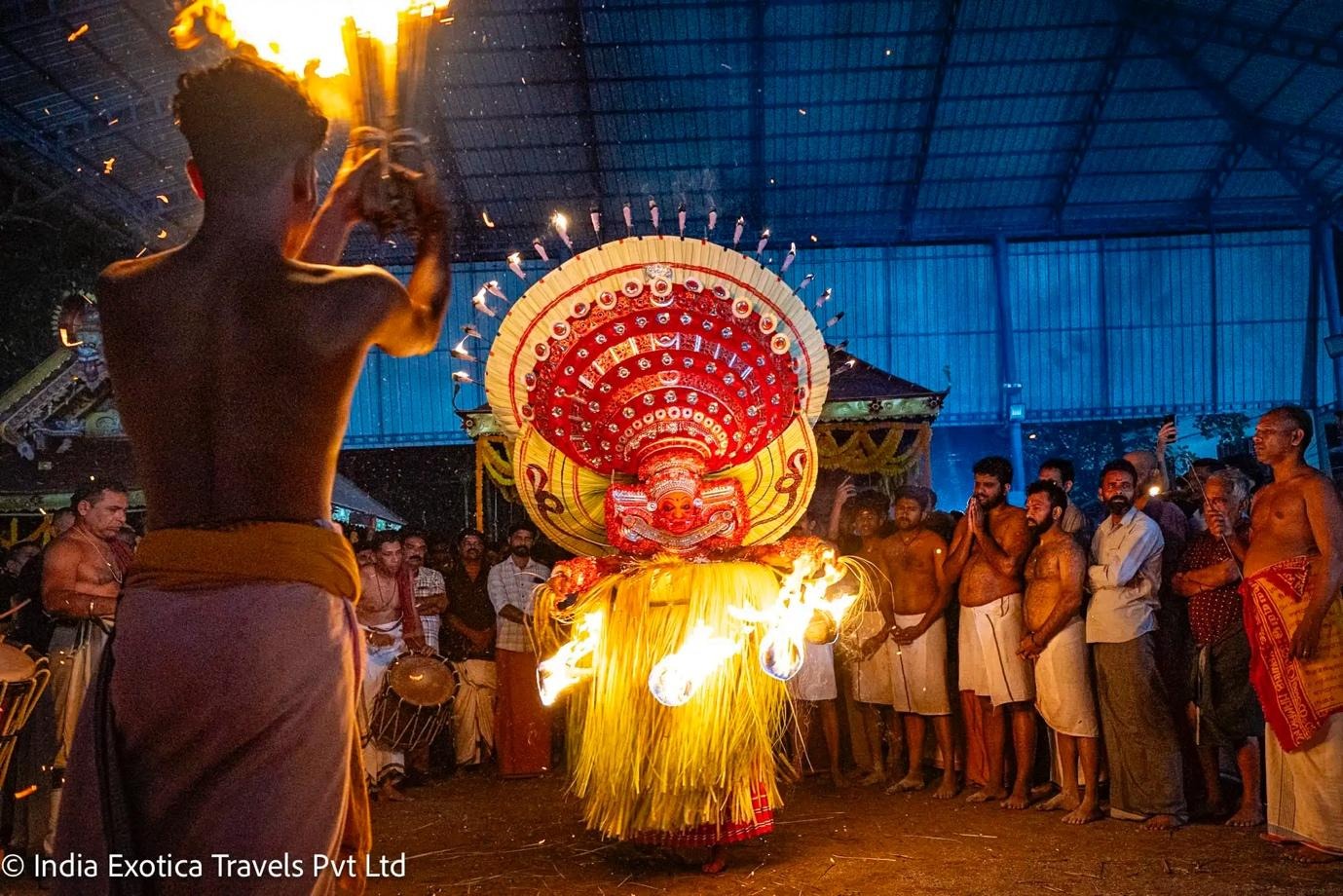
For photographers, Theyyam is a dream — dramatic firelight, expressive faces, swirling movement, and intense devotion. But beyond the visual spectacle lies something far more powerful: authenticity. These are not staged performances for an audience. They are sacred observances rooted in local belief, unfolding in temple courtyards and village shrines just as they have for generations.
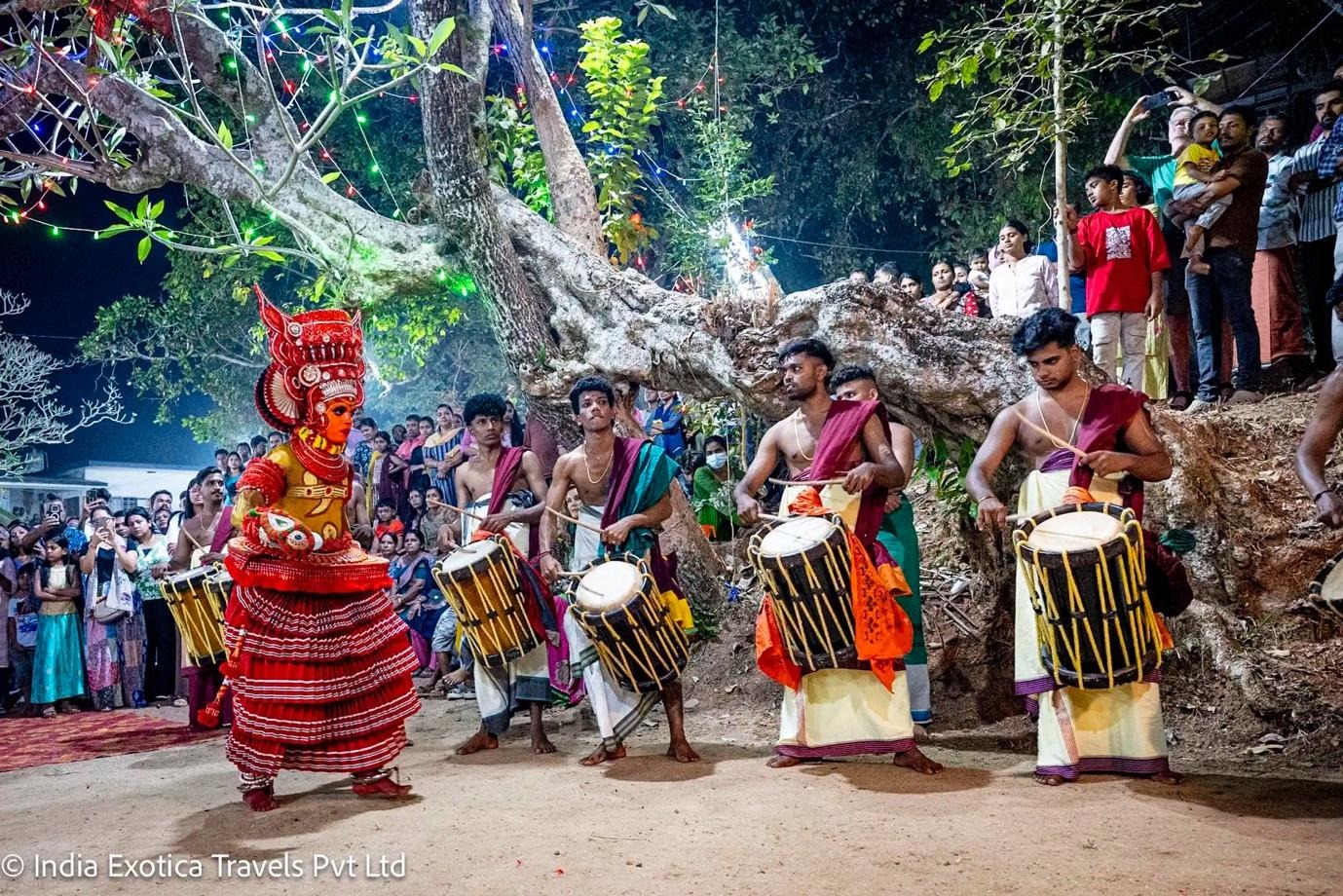
Our group embraced the unpredictability — the midnight departures, the rhythmic drums, the heat of ritual fires, the stillness before dawn. And in doing so, they witnessed Malabar at its most raw and spiritual.
Theyyam cannot be fully understood through description alone. It must be felt — in the vibration of chenda drums, in the glow of oil lamps, in the charged silence before the ritual begins.
And when you stand there, camera in hand, watching the divine come alive — you realize this is not simply photography.
It is participation in something timeless.
Get Your Free Drone Autonomy Guide Today!
